Your home is your safe haven. It will be one of the biggest investments you’ll ever make in your lifetime. Protect it with all you’ve got – or have us do this for you.
Rest assured with a home insurance coverage that you can count on. See us today for a free consultation!

Homeowners insurance is essential for anyone who owns a home in the CNMI. It protects you financially if something unexpected happens, like a typhoon, theft, or an accident on your property. Many lenders require homeowners insurance for those who have a mortgage or a lien on their property. Here’s a simple guide to help you understand what home insurance is and why it is important to invest in it.
A standard homeowners insurance policy typically includes the following:
Provides protection for the structure of your home, including the walls, roof, floors, and built-in appliances. This coverage helps pay for repairs or the complete rebuilding of your home if it is damaged or destroyed by a covered event, such as a typhoon, fire, or another natural disaster prevalent in the Mariana Islands.
Covers other buildings on your property, like a garage, shed, or fence. This can also include structures such as outdoor kitchens, storage rooms, guest houses, and gazebos. These structures are protected from damage caused by covered events such as typhoons, fires, or vandalism.
Covers your personal belongings, like furniture, clothes, and electronics, whether they are in your home or taken off-site.
Covers legal fees, medical expenses, and damages if you are held responsible for someone else's injury or property damage. For example, if a guest slips and falls on your property, liability protection can help cover their medical bills and any legal fees if they decide to take legal action. Additionally, if you accidentally damage a third party’s property, such as hitting their car with your lawnmower, liability protection can assist in covering the repair costs.
You may require more than standard coverage given the nature and level of your business. Good news is, we have the perfect insurance option for this need. We encourage you to explore umbrella coverage if you are looking for additional protection on top of existing limits on your policy. Consider enhancing coverage and obtaining adequate coverage your business begs of you!
Also known as loss of use, Additional Living Expense covers the cost of temporary housing and other expenses if your home is uninhabitable due to a covered event. Other types of expenses include meals and storage fees.
Homeowners insurance policies typically cover a variety of perils to protect your property and personal belongings. These commonly include:
Fire, Smoke, and lightning strikes: Damages caused by fire, smoke or lightning strikes are generally covered.
Explosions: Coverage for damage resulting from explosions.
Burglary/Theft: Protection against loss or damage from burglary or theft.
Vandalism: Protects against intentional acts of property damage, such as graffiti.
Strike Riot, Civil Commotion: Protects against damages caused by violent disturbances, turmoil, and unrest.
Falling Objects: Covers damage from objects that fall from above, like tree branches.
A standard homeowners insurance policy typically includes the following:
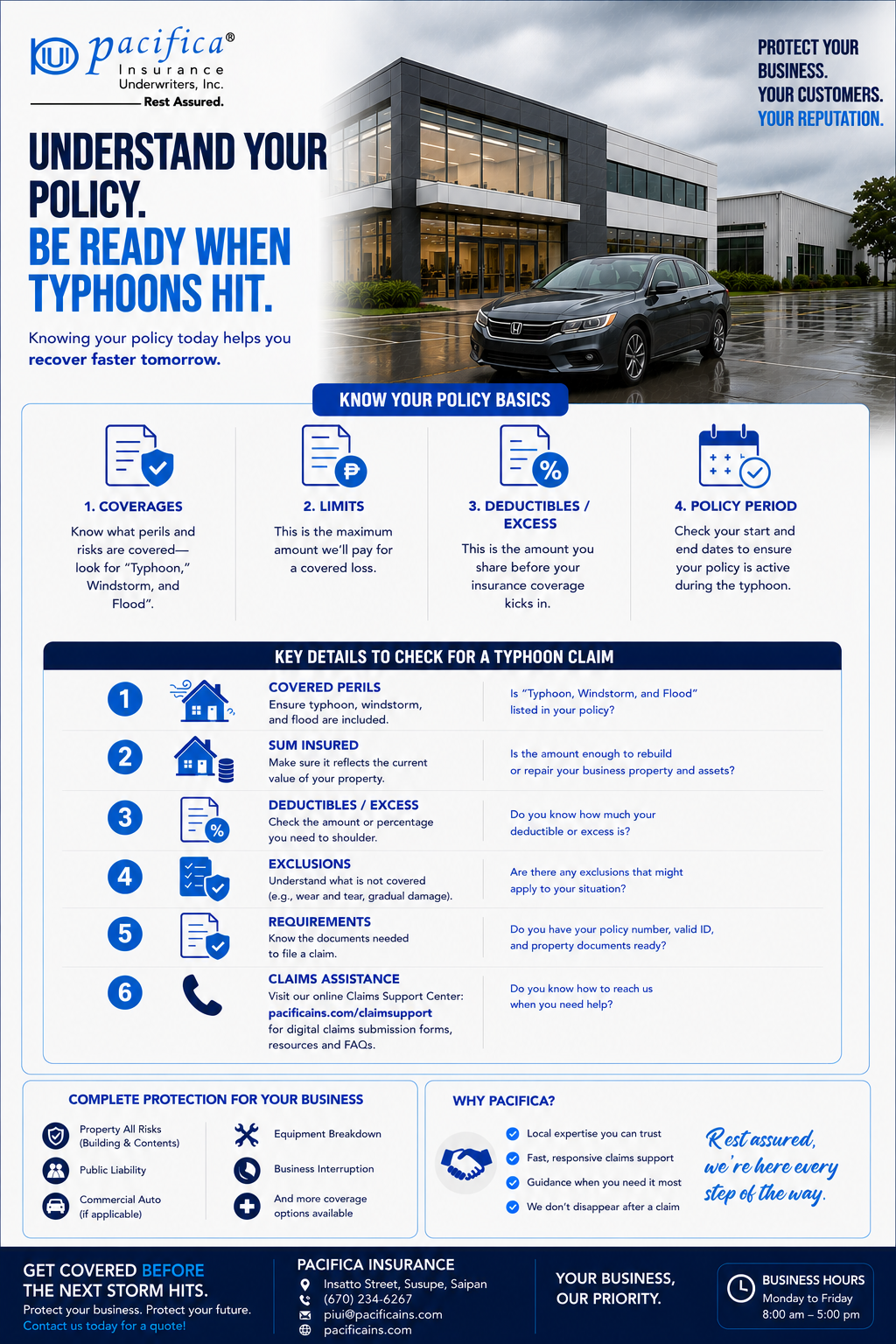
Standard policies do not typically cover typhoon damage. Given the susceptibility of homes in the CNMI to severe typhoon and tropical storm winds, it is highly recommended to acquire this coverage.
Standard policies do not typically cover flood damage. If you live in a flood-prone area in the Mariana Islands, consider adding flood insurance.
Standard policies do not typically cover earthquake damage. Due to the frequent seismic activity in the CNMI, it is highly advisable to add this coverage to your home insurance.
This provides extra liability coverage beyond your standard policy limits, safeguarding you in case of significant claims that exceed your homeowners or auto insurance coverage. Umbrella insurance is particularly beneficial if you have considerable assets or are at risk of facing large lawsuits.
Cover valuable items like jewelry, art, and collectibles for their full value, as standard homeowners insurance policies typically do not include coverage for such valuables and other excluded personal property.
There are different types of homeowners insurance policies, each providing various levels of protection:
Home dwelling can be covered in various ways, ranging from basic to special policies. A basic policy offers limited protection for specific events like fire and theft. A broad policy expands on this by including additional events such as damage from falling objects and water leaks. The special policy provides comprehensive coverage for nearly all events, except for those explicitly excluded. Each of these policies provides different levels of protection, allowing homeowners to choose the coverage that best meets their needs.
This policy is for tenants who rent their homes. It covers personal belongings against events like theft, fire, vandalism, and some water damage. Renters insurance also provides liability coverage, which protects tenants if they cause injury to someone or damage another person's property. However, it does not cover the physical building, which is the landlord's responsibility.
Several factors influence the cost of your homeowners insurance:
In the Mariana Islands, the risk of natural disasters like typhoons and earthquakes can significantly impact your premium. Homes in high-risk areas may have higher premiums.
The CNMI has faced several significant natural disasters in recent years, most notably Super Typhoons Yutu and Soudelor. It also lies along an active tectonic boundary, resulting in frequent earthquakes. These quakes underscore the need for comprehensive insurance and disaster preparedness. The frequent occurrence of such disasters highlights the vulnerability of the region to extreme weather events.
The age, size, and construction of your home affect the cost and its insurability. Older homes or those built with materials more likely to be damaged may cost more to insure. Homes constructed with concrete or other sturdy materials generally have lower insurance costs due to their durability and resistance to damage. On the other hand, homes made from wood or other less durable materials may have higher premiums.
The amount of coverage you choose and the deductible you set affect your premium. Higher coverage or lower deductibles mean higher premiums. For example, if you choose a deductible of $1,000, you will need to pay that amount out of your pocket before your insurance company covers the remaining costs for a covered claim. If you raise your deductible to $2,000, your monthly premium might decrease, but you will need to pay $2,000 before the insurance kicks in. Additionally, deductibles may vary by type of peril and levels of risks which consider a variety of factors, so it's important to review your policy carefully.
Your history of filing claims can influence your premium. The nature and size of the claim may cause you to lose discounts and result in higher premiums. Frequent claims can raise your premium or make it difficult to renew your policy. Maintaining your home and managing risks can help prevent claims. Regularly inspect and repair your roof, plumbing, and electrical systems to avoid damage. Install smoke detectors, security systems, and storm shutters. Trimming trees and securing outdoor objects can also minimize storm damage. Taking these steps can reduce the chance of filing claims, helping to keep your insurance premiums lower and ensuring continued insurability.
Itemize and gather a complete listing of your personal furniture, appliances, electronics, computers and other items you would like to have covered and keep a copy of their corresponding receipts or proof of purchase and/or ownership.
At-home and drive for less. Learn more about our auto insurance.
Save 10% on your homeowners policy with our bundle program

For a proposal that will work for you, please complete our online Request for Proposal Form.